08.10.2026 | Blog
Effective education delivery at scale: Key learnings from SLEIC
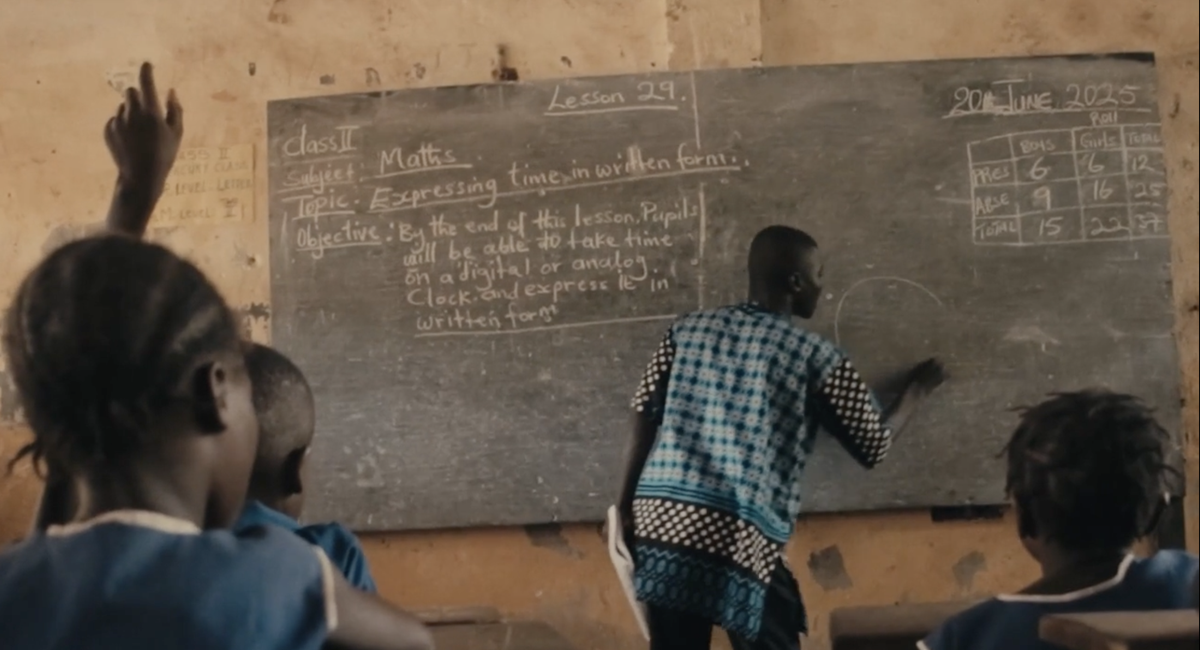
Expanding access to education and learning across low- and middle-income countries has been a major focus – and achievement – over the last 60 years. Today, however, the challenge has evolved: we need to improve what and how children learn, once they arrive in the classroom. At Bridges Outcomes Partnerships (BOP), we have been working alongside a range of partners on exactly that: increasing quality of education, as well as access to it, to enable better outcomes for every student.
How? Using an outcomes partnership approach.
BOP recently participated in the Sierra Leone Education Innovation Challenge (SLEIC): an $18 million outcomes partnership and Sierra Leone’s first outcomes-based education programme. Launched by the government of Sierra Leone and EOF, it aimed to transform learning outcomes for students by using a different approach to education funding and delivery.
The outcomes partnership model links funding directly to measurable improvements in students’ learning. It’s an approach characterised by three core enabling features (as set out in our People-powered Partnerships learning document): collaborative design, flexible delivery, and clear accountability. These create the conditions for local innovation and continuous improvement among partners, with the shared goal of creating long-term, meaningful change.
Overall, the initiative reached 134,000 pupils in 325 schools nationwide – achieving learning gains that outperformed 70% of comparable programmes globally.
Under SLEIC, BOP partnered with local education delivery organisations EducAid, Rising Academies Network and Street Child across three top-performing delivery streams, out of the initiative’s five geographical areas. Together, we worked with 193 schools, improving the quality of education for over 48,000 children. Each partner brought an evidence-informed model and practical implementation experience to the partnership, with deep understanding of the local community.
We put these models into practice at scale in Sierra Leone. What did we learn?
1.The impact of structured teaching
One feature of the models consistently stood out as effective: structured teaching. Pre-prepared lesson plans, sequenced content, and linked assessment frameworks helped teachers deliver more consistent lessons and track learner progress. This matters in any school system, but especially where teachers have had limited training or have few teaching and learning materials. Well-designed lesson plans reduce the burden on teachers to create content from scratch and make it easier for teachers to focus on supporting and improving pupil understanding. They also ensure that the national curriculum is covered comprehensively.
2.Grouping by learning level
A second feature driving impact was grouping pupils by their learning level rather than their age. This allowed children who had fallen behind to build and consolidate core foundational skills, before moving on to learn higher skills. Likewise, Rising Academies’ remedial FasterMaths and FasterReading programmes provided targeted support to enable children with additional support needs to catch up to their classmates. An initial test put each child into the class appropriate to their abilities – meaning they could learn and progress at a pace suitable to their individual needs.
3.Frequent instructional coaching
Frequent instructional coaching, where teachers are coached on their teaching practices, emerged as the third ingredient for success. Classroom observation, followed by one-to-one feedback and modelling, helped teachers translate training into day-to-day practice. The quality and frequency of that support mattered significantly: improving teaching requires behavioural change, and is more likely to stick when teachers receive regular feedback, practical suggestions, and repeated opportunities to put their learnings into practice. Good coaching also strengthens motivation by making teachers feel supported and valued, creating a positive cycle where they want to continually improve.
+++
On its own, a strong delivery model is not enough to guarantee impact at scale in a complex environment. But relentless focus on data-informed and person-centred implementation, in this case responding to changing needs of students, teachers and communities, in a collaborative partnership can help. Ann-Marie Kamara, a head teacher working with Street Child, observed the impact of the intervention: student engagement was visible, and they eagerly participated in play-based sessions, with access to reading materials and number solving games, sharing their experiences at home.
“As a school, we have decided to continue with Teaching at the Right Level even when the [SLEIC] project ends because our children in upper classes have improved greatly in numeracy and literacy.” – Madam Ann-Marie Kamara, Head teacher
Alongside our partners, we learned that the same activity could produce very different results depending on how often it occurs, who delivers it, and whether expected impacts are clearly defined. We noticed that coaching was less effective when school visits were too infrequent or when coaches lacked a clear framework for actionable feedback. Meanwhile, head teacher coaching proved more effective when it was reinforced by officers from local government, whose role and authority helped turn observation into action. This real-time insight and data enabled us to respond with timely delivery adaptations and innovations – implementing learnings quickly to ensure the highest likelihood of achieving positive impact.
“Lesson observation is one good practice that I have adopted from EducAid. This has been helping the teachers to improve on their limitations and also help me, the headteacher, to identify areas that my teachers need to improve on.” – Abdul T Conteh, Head teacher
Looking ahead
There is already strong evidence around how to improve learning in low-resource settings; SLEIC adds valuable insights to that picture. EOF’s report Challenge Accepted, for example, reflects on the initiative’s Year 3 results and distils findings into six clear, encouraging messages about the outcomes-based programme – positive results in the context of system-wide decline. In this piece, we have drawn out learnings specific to the practical application of an outcomes-based approach to education.
Together, our three learnings point to a simple but notable conclusion: quality teaching at scale depends on giving teachers structure, grouping pupils according to need, and supporting teachers to keep improving.
In SLEIC, structured teaching meant providing teachers with reliable lesson plans and assessment tools, freeing them to focus on how well pupils were learning rather than what to teach next. Grouping by learning level ensured no child was left behind or held back – teachers could meet each pupil with material appropriate to where they actually were. And frequent instructional coaching turned training into lasting practice, helping teachers turn new techniques into everyday habits via ongoing feedback and encouragement.
Individually, each of these elements improves teaching quality. Together, they reinforce one another – well-structured lessons are easier to coach against, and level-based grouping makes it easier to spot exactly where a teacher’s coaching support is most needed.
In resource-constrained settings, implementation must focus on putting these most impactful activities into practice, and doing it well. Real-time, person-centred data and insights are key enablers, providing teams with ongoing opportunities to learn what students and teachers need – opportunities to adapt delivery so it is even more impactful.
As governments and NGOs look to scale effective approaches to education in Sierra Leone and beyond, they must prioritise embedding the data-driven, person-centred approach enabled by outcomes models, and the above three delivery techniques – both within existing systems and as part of new initiatives. In doing so, student progress will continue to strengthen, learning impacts can be sustained over time, and teams will be able to achieve truly meaningful positive change.
Related news
View all-

12.11.2025 | Blog
Understanding the UK Housing System: A New Resource for Refugees
-
30.09.2025 | Blog
#HopeNotHoops: Creativity, community & opportunity at Turning Tides’ youth photography exhibition
-
01.05.2025 | Blog
Reflections: Comparing traditional employment support with an outcomes-based approach
-
12.11.2025 | Blog
Understanding the UK Housing System: A New Resource for Refugees
-
30.09.2025 | Blog
#HopeNotHoops: Creativity, community & opportunity at Turning Tides’ youth photography exhibition
-
01.05.2025 | Blog
Reflections: Comparing traditional employment support with an outcomes-based approach